

Prices DROPPED! Best Value Storage in Geelong Get a FREE Quote

Small business storage in Geelong: when your stock outgrows the spare room

Say you sell candles online from your home in Norlane. A supplier drops dozens of boxes of jars and wax ahead of the Christmas rush, and by the weekend the spare room, the hallway and half the garage are stockrooms. You can’t find the order you need to post and you’ve stopped inviting anyone over.

It’s a familiar problem for many small businesses across Geelong. Stock arrives faster than the space to hold it, and the house quietly turns into a warehouse.

How do you know it’s time to move stock out of the house?

Most owners put up with a cluttered home for longer than they should. These are the signs that a separate space would make your working week easier:

  • 1) You move other things out of the way just to reach your stock
  • 2) Packing orders takes longer because you’re hunting for products
  • 3) Bulk or seasonal buying has nowhere to go
  • 4) Stock sits in three different rooms and you’ve lost track of what’s where

If two or more of those sound like your week, a storage unit is worth a proper look. It keeps your stock in one place and gives your home back.

What can a small business store in a storage unit?

Greenspace Storage’s units suit more than boxes of product. Retailers and online sellers use them for stock, samples and marketing materials. Other business customers store shopfittings, office furniture, computer equipment, documents and archived files.

That matters because a stockroom is rarely just stock. The packing supplies, the display pieces you only use at events and last year’s paperwork all take up room you’d rather spend on products.

How do you set up a storage unit for stock?

A unit that’s set up well saves you time every time you visit. Here’s a simple way to approach it:

  1. 1) Work out how much space you need. The space calculator takes a couple of minutes. Plan for your busiest month, not your quietest one.
  2. 2) Choose the right floor. Ground floor units have drive-up access, so you can unload straight from your vehicle to the unit door. First floor units use lift access and suit lighter stock or archives you don’t touch often.
  3. 3) Use the height. Units stand roughly 8ft tall, so shelving lets you build up instead of out. Fast-moving lines go at the front and slow movers at the back or on the top shelf.
  4. 4) Box and label as you go. Label every box on two sides and keep a simple inventory list. You’ll thank yourself in the first week of December. Packing boxes and locks are available on site.
  5. 5) Keep a clear walkway. You want to reach any line without moving three others. Extra wide corridors and free trolleys make the heavier runs easier.

Is Corio a practical location for Geelong businesses?

Corio sits just north of Geelong, around 20 minutes from the CBD. Businesses and sellers store with us from North Geelong, Norlane, Bell Post Hill, Lara and further afield across the greater Geelong region. With seven-day access from 7am, a stock run can fit around your trading hours rather than the other way around.

Your stock is also an asset, and the facility treats it that way. More than 200 individually alarmed units mean the alarm triggers if someone approaches your unit specifically, not only at the gate. Gate access uses controlled entry codes, every gate movement is recorded and 24/7 CCTV covers the entrances, corridors and common areas. Our guide to layered security explains how those pieces work together. No facility can guarantee against every risk, but this is a purpose-built site designed with security in mind from day one.

Your next step

If the spare room has had enough, start with the space calculator to see roughly how much room your stock needs. Then have a look at our business storage options or call the team on 03 6163 1053 to talk it through.

Decluttering your Geelong home this spring: what to store, what to skip

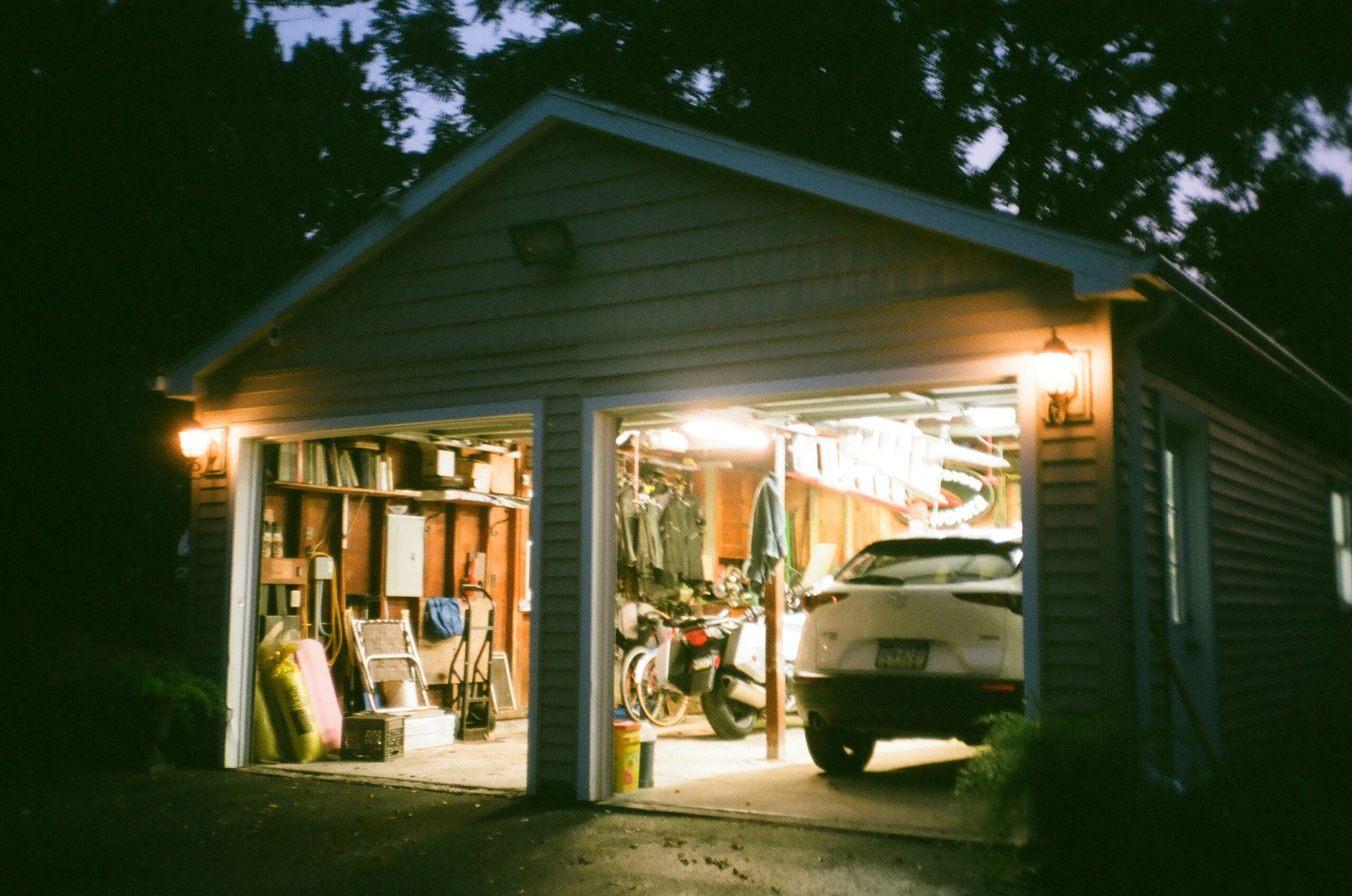
A family in North Geelong opens the garage on the first properly warm Saturday of spring and can’t find the lawnmower. Winter has a way of doing that – bikes get pushed to the back, boxes multiply, and by September the garage has quietly become storage for everything except the car.

If that sounds familiar, spring is the natural time to sort it out. The problem isn’t motivation; most people know they want a clear-out. The problem is knowing what actually needs to leave the house and what can just be tidied back into place.

Why the spring cleaning reset feels bigger in Geelong

Geelong winters push a lot of personal things indoors that summer usually keeps outside; outdoor furniture, garden gear, sports equipment, the kids’ bikes. By the time spring arrives, garages and spare rooms across Lara, Norlane, Bell Post Hill and Corio are carrying six months of accumulated overflow.

For some households, the spring clear-out overlaps with something bigger; a move, a renovation, a downsize. For most, it’s simpler than that: the weather’s turned, the days are longer, and it’s finally time to deal with the stuff that’s been in the way since March.

What actually needs to leave the house

Not everything you’re decluttering needs to go into storage; some of it just needs a proper home in the garage, and some of it genuinely needs to be donated or binned. Storage makes the most sense for things you want to keep but don’t need close at hand:

1. Seasonal items you’ll want again – winter bedding, heaters, ski or camping gear between trips

    2. Furniture you’re keeping for later – a nursery set before a baby arrives, a spare bed for when family visits

    3. Anything mid-renovation – furniture and boxes that need to be out of the house while a room is being worked on

    4. Sentimental or bulky items you don’t have daily use for, but aren’t ready to part with

    If you’re genuinely unsure whether something’s worth keeping, storing it for a few months rather than binning it straight away gives you a low-pressure way to decide.

    A room-by-room storage approach that actually works

    Trying to declutter the whole house in one weekend is how most spring clean-outs stall by lunchtime. Working through it in stages keeps it manageable:

    1. Start with the garage. It’s usually the most overwhelming room and the one with the biggest storage-versus-bin decisions. Pull everything out, sort into keep, store, and go, and only put back what you actually use.

        2. Move to wardrobes. Swap out winter layers for warmer weather clothes, and box up anything you haven’t worn this season for storage rather than leaving it to take up wardrobe space all summer.

        3. Tackle kids’ rooms and toys. Outgrown toys and clothes are usually the easiest decluttering win in the house – sort by age and either store for a younger sibling or pass on.

        4. Clear the spare room or shed last. These tend to become the catch-all for everything from the earlier rooms, so leave them until you’ve already made decisions about what’s staying.

        If you’re not sure how much space you need

        The most common thing that stalls a spring clear-out is not knowing whether what you’re storing needs a small unit or something bigger. Our space calculator walks you through this in a couple of minutes; so you don’t need to guess, and you don’t need to overbook a bigger unit than you’ll use. For a closer look at what fits where, our guide to choosing the right unit size breaks it down by what you’re actually storing, not just square metres.

        Making the physical storage part easier

        The decluttering decisions are the hard part; moving the boxes shouldn’t be. At Greenspace, ground floor units have drive-up access, so you can load straight from the car without carrying everything through a corridor, and free trolleys are available on-site if you need a hand with the heavier stuff. Site access runs from 7am to 10pm, seven days a week including public holidays, so a spring clear-out doesn’t have to fit around anyone else’s schedule but yours. With over 200 individually alarmed units on-site, what you store stays as secure as what you’ve kept at home – often more so.

        So, if the garage is the reason you started reading this, that’s the room to start with this weekend. Pull it apart, sort it properly, and use the space calculator to see what a unit would actually cost you in space – not dollars, just square metres – before you put anything back.

        Storage between houses: How Geelong families bridge the gap

        The removalist truck is booked for Friday. Settlement on the house you’re leaving is Friday too. Settlement on the place you’re moving into is three weeks after that, because the vendor’s own purchase fell through and everyone agreed to shift the date rather than collapse the chain.

        So now you’ve got a four-bedroom house worth of furniture, a family, and twenty-one days with nowhere to put any of it.

        If that sounds familiar, you’re in good company. It’s one of the most common reasons people call us, and it’s almost never something anyone planned for. Here’s how the gap between houses actually works, what it costs you in time and hassle, and how to plan it so the three weeks in the middle aren’t the worst part of your move.

        Why the gap between houses happens more often than people think

        Settlement dates are set by contract, not by convenience. When you’re selling one property and buying another, you’re relying on two separate chains of buyers and sellers lining up on the same day – and each of those chains has its own finance approvals, building inspections and last-minute wobbles.

        Most of the time it works. When it doesn’t, the gap can be anything from a few days to a couple of months.

        We see the same pattern across the greater Geelong region. A family in Lara sells quickly in a strong market, then spends six weeks finding the right place in Highton. Someone in Norlane settles on a new build in the northern growth corridor that’s running behind schedule. A couple in Bell Post Hill moves out on time and moves in late, because the vendor’s removalist cancelled.

        None of these are unusual. They’re just rarely accounted for until the dates are already locked in.

        What short-term storage between houses actually involves

        The idea is straightforward. Everything comes out of house one, goes into a unit, and comes out again when house two is ready. What catches people out is the practical detail around that.

        You’ll be handling your belongings twice instead of once, which means two loading days rather than one. You’ll want the things you need day-to-day – clothes, school gear, the kettle – accessible rather than buried behind a wardrobe. And you’ll want to be able to get to the unit outside work hours, because moving days rarely finish at 5pm.

        That last point matters more than people expect. Our site access runs 7am to 10pm, seven days a week, including public holidays, which means an evening drop-off after work is a normal thing to do rather than a favour you have to ask for.

        Plan for longer than you think

        In our experience, the single most common mistake with a settlement gap is booking storage for exactly the number of days on the contract. Dates move. Builders run late. Finance takes an extra week.

        If your gap is three weeks, plan around a month. It’s far easier to finish up early than to scramble for an extension while a truck is idling in the driveway.

        What size unit do you need for a whole house?

        This is the question we get asked most, and the honest answer is that it depends less on the number of bedrooms than on how much furniture you’ve accumulated.

        As a rough guide, a 2m x 3m unit will take the largest items found in a regular home, while a 3m x 2.5m unit is big enough to fit a large vehicle with room to spare. A smaller 1.5m x 2.5m unit suits about a small apartment’s worth of belongings.

        The detail most people miss is height. Our units are roughly 8ft tall, and that vertical space is genuinely usable if you pack for it. A unit that looks too small on the floor plan often isn’t, once boxes are stacked properly and mattresses are stood on their edge.

        If you’re not sure where you land, the space calculator takes about two minutes and gives you a far better starting point than guessing. For a fuller breakdown of what fits where, we’ve written a separate guide on what size storage unit you need.

        Five steps for packing a settlement gap

        Packing for a short gap is a different job from packing for long-term storage. You’re optimising for retrieval, not preservation.

        1. Separate a “living out of” box before anything else. Two weeks of clothes, chargers, medications, school uniforms, the coffee gear. This stays with you, not in the unit.
        2. Load the unit in reverse order of need. Anything you might want during the gap goes in last so it’s nearest the door. Bed frames, garden tools and the spare dining chairs go to the back.
        3. Leave a walkway. A narrow aisle down the middle costs you a small amount of floor space and saves you unstacking half the unit to reach one box.
        4. Label the ends of boxes, not the tops. Once boxes are stacked, the tops are invisible. The ends are what you’ll be reading.
        5. Photograph the unit when you’ve finished loading. It’s useful for your own memory and it’s useful for insurance purposes if you’ve arranged cover for the contents.

        What to look for when you’re storing everything you own

        There’s a difference between storing a few boxes of seasonal gear and storing the entire contents of your home. For a settlement gap it’s the second one, and that changes what’s worth paying attention to.

        Ask how the security is structured. At our Corio facility, every one of our 200-plus units has its own individual alarm, so an alert triggers if someone approaches your specific unit – not just when the front gate opens. That sits alongside perimeter fencing, electronic gate access with recorded entries and 24/7 CCTV across the entrances and common areas.

        No facility can promise that nothing will ever go wrong, and any operator who tells you otherwise is overselling. What a purpose-built site can do is design security in from the start rather than bolt it on afterwards. We built ours in 2021 to our own specifications, which is why the corridors are extra wide, the lighting is modern throughout and the ground floor units have drive-up access – you reverse the truck to the roller door and unload straight in.

        The trolleys on site are free to use, which sounds minor until you’re moving a household in February heat.

        Making the drive work with a moving schedule

        We’re in Corio, about 20 minutes north of Geelong CBD, and that distance is a fair thing to weigh up. For a settlement gap it usually works in your favour rather than against it.

        You’re making two big trips, not twenty small ones. Drive-up access at ground level means the loading itself is faster than a multi-storey site in town where everything goes through a lift. And with access until 10pm every night, you’re not fitting your move around a facility’s opening hours.

        If you’re coming from North Geelong, Norlane or Lara, you’re on the doorstep anyway.

        Where to start

        If you know your settlement dates, work backwards. Book the unit for a week either side of the gap, size it slightly larger than you think you need, and get the truck booked early – removalists in Geelong fill up fast around end of month, which is when most settlements land.

        Run your inventory through the space calculator to get a size, have a look at our personal storage units to see what’s available, or call the team on 03 6163 1053 if you’d rather talk it through with someone. If your dates are still moving around, tell us – we’d rather help you plan for the gap than watch you guess at it.

        What is Self Storage

        At the center of it, self storage is a reference to renting a secure space to store personal or business items. These facilities, often known as storage units, come in a range of sizes and are housed in dedicated facilities to keep them secure.

        Unlike traditional storage options, self storage facilities provide customers with full access to their units no matter what. This allows them to go back and forth to retrieve or store items as they require.

        Self storage facilities are designed to cater to a wide range of needs and you can store everything from household items during a move or you can store surplus inventory for your business.

        Why Do People Use Self Storage?

        Used for a wide variety of reasons, so here are some of the most common reasons why people in Corio and the broader Geelong area turn to self storage.

        Moving home

        Moving is stressful enough as it is, and it can be quite a complicated process when there’s a gap between moving out of one property and moving into another. Self storage provides a bridge. It’s a safe and convenient place to store furniture and appliances temporarily during this period of transition.

        Decluttering

        A clutter free home and office is not only visually appealing, but it’s also going to promote much better mental well-being. For those in Corio looking to free up some space without parting with any sentimental or seasonal items, self storage is the ideal solution. Christmas decorations, camping gear or even rarely used sentimental furnishings and ornaments can be stored securely.

        Business need

        Businesses in and around Geelong often face storage challenges, especially those with limited onsite space. Self storage can help businesses to store excess inventory, promotional materials, or even office equipment, which frees up valuable working space instead. 

        Downsizing

        For those looking to transition from their home to something smaller, downsizing can help. Self storage offers a way to hold on to cherished belongings, and these may no longer fit in the new space. It’s a practical way for retirees to downsize but who still want to keep their family heirlooms or memorabilia in one place. 

        During renovations

        This can disrupt a living space and it can also put your business at risk of damage. A storage unit offers you a secure place to keep your electronics, furniture and any other valuables while your home undergoes construction.

        The Benefits of Self Storage

        Self storage facilities offer a huge range of benefits that make them a very attractive option for residents and businesses across the Corio and the surrounding Geelong area. Some of the biggest benefits include the following.

        Flexibility. Self storage facilities are accessible 24/7 and they typically offer a variety of unit sizes. You can have self storage in the form of a small locker, or you can go for a large shipping container type space. You can store furniture and vehicles in self storage, and with it being a flexible option, you can choose the right size for you and upgrade or downsize as you need as well.

        Security. Most modern self storage facilities are equipped with advanced security features. These features can include anything from 24/7 CCTV surveillance to individually lockable units with heavy duty padlocks. Often there is on site management to monitor activity during business hours as well.

        Convenience. Self storage facilities near Geelong are strategically located, which makes them easier and accessible for residents and businesses in Corio and nearby areas. Customers can also benefit from flexible access hours which allows them to visit their unit at their convenience.

        Cost effectiveness. For both businesses and individuals, self storage can be a cost effective alternative to leasing for individuals. It’s an affordable way to keep your belongings safe in between moves and without overcrowding your home. 

        How to Choose the Right Self Storage Facility in Corio

        If you’re considering going for self storage in Corio or the Geelong surrounding area, it’s important to select a facility that meets your needs. You need to choose a facility that’s conveniently located near your home or your workplace so that you don’t have to travel out too far to get to it. For Corio residents, a local facility does eliminate that hassle of travelling long distances.

        You should also assess your storage needs, as we went through earlier to find a unit size that fits your requirements. Plenty of facilities can offer you a range of sizes, so you don’t have to go for the biggest and you don’t have to go to a locker. That the storage facility that you choose has a robust security system in place, especially if you’re using it for long term storage. You should look out for features such as secure access systems and CCTV. It should be in a well lit premises where you feel safe and comfortable going there after hours.

        Speaking of hours, if you need frequent access to your self storage facility, then consider one with flexible access or 24/7 availability. There are some storage facilities that also offer additional amenities that include insurance, restored items, moving assistance or packing supplies.

        Self Storage for the Geelong and Corio Community

        Self storage is so much more than just a place to keep your belongings. It can become a practical solution to some of the most common challenges, both personally and in your professional life. 

        For the Geelong and Corio community, self storage facilities provide a valuable service. Whether you’re renovating, relocating or you simply need extra space for tools, self storage and Corio can offer the convenience and flexibility that you need. When you understand your storage needs, you’ll be able to move your belongings in no time at all. 

        Take the time to research local facilities and find one that suits your specific requirements. With the right solution, you have the extra space that you need to stay organised and stress free.